



By using our website, you agree to the use of cookies as described in our Cookie Policy
Mahi Fishing Charters Near Brickell
Mahi fishing near Brickell isn't about luck. It's about reading the water, moving with the fish, and knowing when to strike. These fish don't wait around. They move fast, hit hard, and reward anyone who's ready with the right approach. Out here, every trip brings a new challenge, and the payoff is always worth it.
When We Target Mahi for the Best Results
With water warming up from late spring through early fall, mahi start showing in real numbers. April through September brings the most consistent action, but May and June often deliver the hottest bites. As the sun rises, the water stays clear and the fish stay active. Early mornings set the tone for the day. By midday, the bite can slow, but working current lines or floating debris keeps the odds in your favor. Summer weather changes quickly, so we keep a close watch on wind and storms to make sure you're fishing in the best conditions. Calm seas help us spot weed lines and floating structure, which is where mahi stack up.
How We Find Productive Mahi Waters Near Brickell
When the Gulf Stream pushes close to shore, we don't waste time running miles offshore. Instead, we focus on the stretch between Key Biscayne and the outer reef, where warm, clear water brings bait and predators together. For anglers coming from Brickell, these fishing grounds are just a short drive away. Mahi cruise along temperature breaks, current edges, and anything floating at the surface. We scan for the right signs and move fast when we spot them.
- Weed Lines and Sargassum Mats: Floating seaweed patches pull in baitfish, and mahi follow for easy meals.
- Current Breaks and Color Changes: Shifts in water color show where bait gathers and predators hunt.
- Floating Debris and Structure: Logs, pallets, or even trash drifting at the surface create shade and shelter, drawing in mahi looking to ambush prey.
- Edge of the Continental Shelf: Deeper drop-offs hold bigger schools and larger fish, especially during peak months.
- Active Bird Flocks: Diving birds point to feeding activity below, and mahi often show up under the same bait schools.
We cover water, watch for birds, floating structure, and surface splashes. Sitting still rarely pays off. Staying mobile and alert puts us on fish faster and more often.
What Happens Once We're Fishing
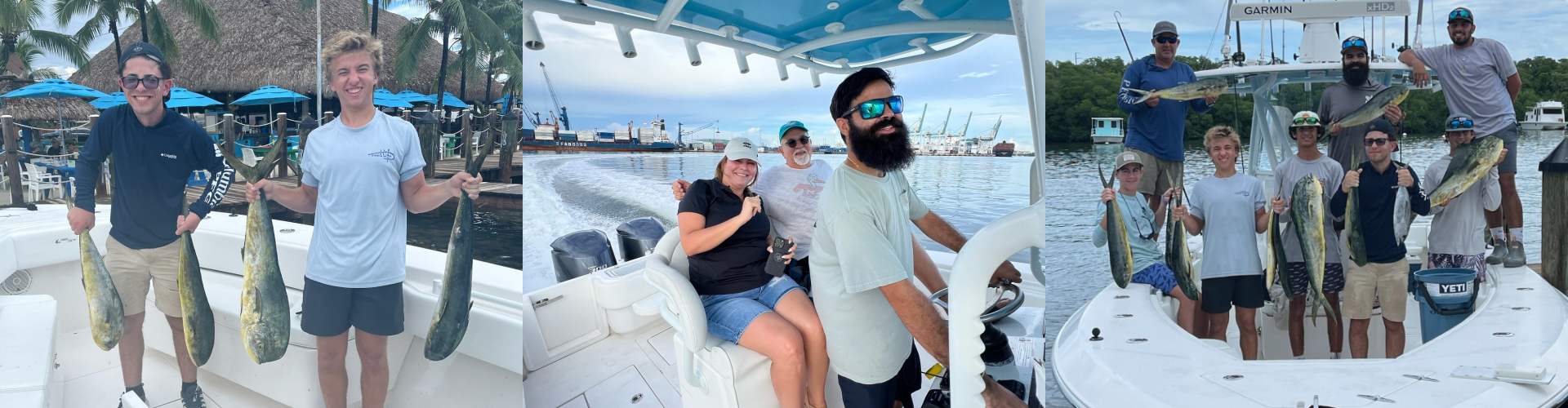
With lines in the water, the pace shifts. Mahi hit hard, run fast, and light up with flashes of green and yellow as they fight near the boat. Even smaller fish put up a real battle. Most trips run four to six hours, giving us time to find active schools and adjust as conditions change. We start early to take advantage of calm seas and hungry fish, then adapt as the day unfolds. When one mahi bites, more are usually close by. These fish travel in groups, and quick action keeps the momentum going.
Other species often join the mix. Tuna, wahoo, and sailfish share the same waters, and it's common to hook something unexpected while chasing mahi. That variety keeps every trip interesting and gives you a shot at more than just one kind of catch.
Our Approach to Tackle and Methods
When conditions shift, so do our tactics. Lighter spinning rods give you more feel and a better fight, while conventional setups handle bigger fish when they show up. We use 20- to 30-pound test with fluorocarbon leaders. That's enough to handle sharp teeth and fast runs without sacrificing action. Live bait is a top choice, but rigged ballyhoo, skirted lures, and diving plugs all have their moments.
- Trolling with Skirted Lures: Bright colors mimic baitfish and draw aggressive strikes from cruising mahi.
- Live Bait on Spinning Gear: Pilchards or goggle-eyes fished near structure trigger explosive surface bites.
- Rigged Ballyhoo on Wire: Covers water quickly and tempts fish holding deeper.
- Casting Poppers and Stick Baits: Topwater lures work when mahi are feeding at the surface, giving you control during the fight.
- Pitch Baits to Floating Debris: Dropping live bait or small lures near weed mats or logs targets fish holding tight to cover.
We keep rods ready for every scenario. If mahi are chasing bait on top, we switch to poppers. If they're deeper, we go with live bait or ballyhoo. Flexibility keeps the action steady and the cooler filling up.
What Else You Might Catch on Our Trips
Blackfin tuna, bonito, and kingfish often show up along the same current lines and temperature breaks. Wahoo patrol the deeper edges, and sailfish make appearances when bait schools push up. Barracuda, sharks, and the occasional cobia round out the list. Each species brings its own fight. Tuna dive deep, wahoo run hard, and sailfish put on a show with jumps and long runs. The mix keeps every trip unpredictable and rewarding.
How We Help You Plan the Right Trip
Planning starts with your goals. We recommend booking ahead during peak months, since the best dates fill quickly. Decide how long you want to fish and what you want to target. Half-day trips work for quick outings or families, while full days give us more time to chase fish and adjust to changing conditions. For kids or first-timers, shorter trips keep things fun and manageable.
We always check the weather before heading out. Winds over 15 knots make for rougher seas, and summer squalls can pop up fast. Sunscreen, hats, and plenty of drinks are a must. Shade is limited, and staying hydrated keeps everyone comfortable. We provide all the rods, tackle, and bait you'll need, so you can focus on fishing, not packing gear. From Brickell, it's a quick drive to our departure point, which means you can be on the water fast with more time for fishing. Private charters let you set the pace and target what you want, while shared trips follow a set plan and fish where the captain decides.
Let's Get You on the Water
Mahi fishing charters near Brickell put you in range of fast-moving fish, clean water, and consistent action when conditions line up. Whether you're after a few fish for dinner or want to spend the day chasing schools, we'll get you out there and make it count. Call Sea Toes Charters at 305-962-4014 or visit https://www.seatoescharters.com/book-now to lock in your trip.