

By using our website, you agree to the use of cookies as described in our Cookie Policy
Spring Tuna Fishing Trips Near Key Biscayne
Most anglers think spring fishing is just about warmer weather and calmer seas. But the waters off Key Biscayne tell a different story — one written in baitfish migrations, temperature breaks, and tuna that show up like clockwork when conditions align. If you're not paying attention to the Gulf Stream's edge or the thermocline shifts happening just offshore, you're missing the window.
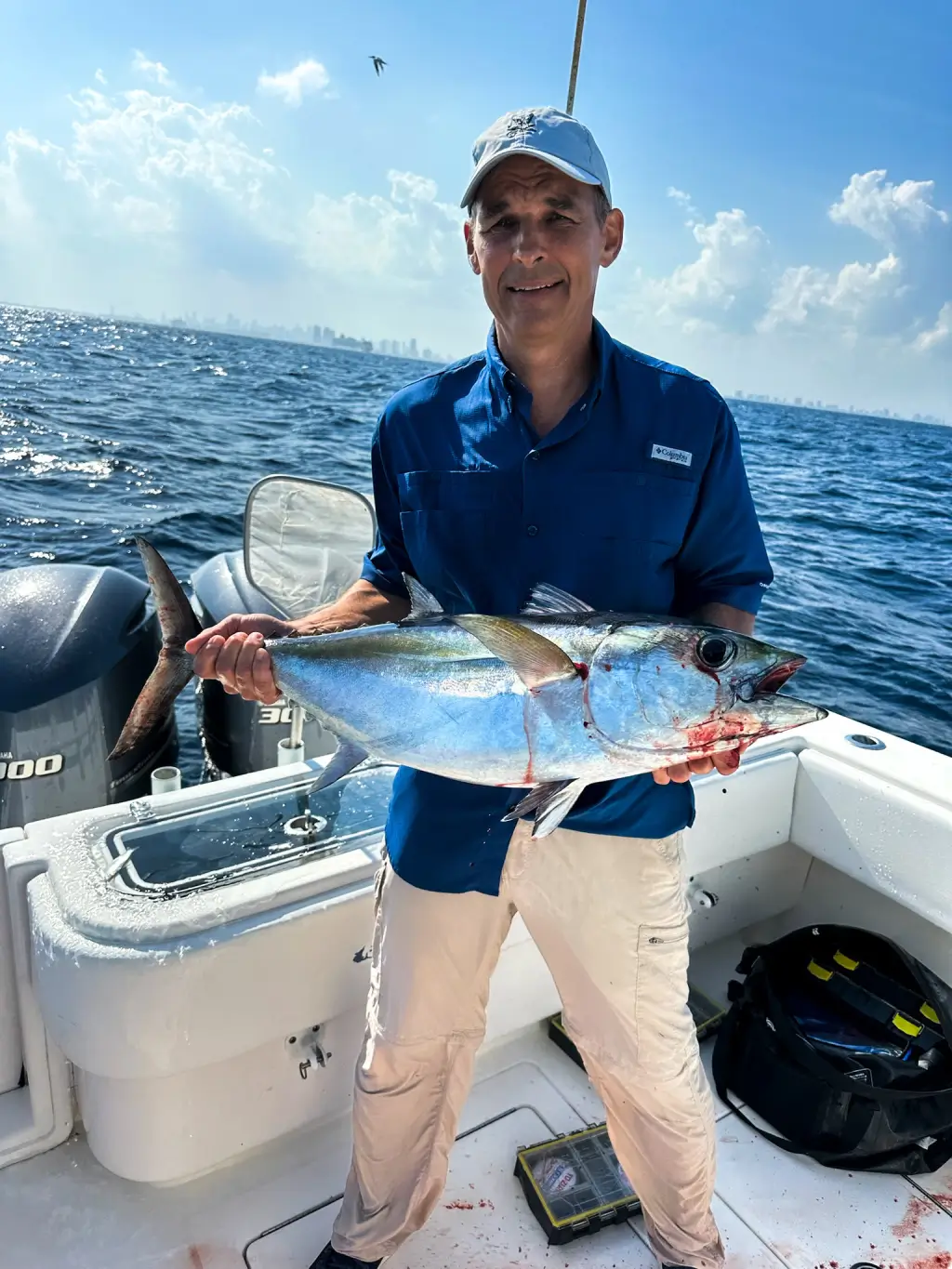
Here's what matters. Spring isn't just another season on the calendar. It's when blackfin tuna stack up along the reefs, when skipjack run hot on the surface, and when the occasional yellowfin makes an appearance that turns a good day into a legendary one. Every trip should be planned around current patterns, not last year's reports. Every charter decision should factor in captain experience and boat capability — not just how the photos looked online.
The Gulf Stream Delivers When Conditions Click
Tuna don't just wander into South Florida waters by accident. They follow the food, and in spring, that food is everywhere. As water temps climb into the mid-70s, baitfish schools tighten up along drop-offs and structure. Pilchards, ballyhoo, and flying fish become easy targets — and tuna capitalize fast.
The Gulf Stream runs close to Key Biscayne, sometimes within a few miles of the coast. That proximity means shorter runs, more fishing time, and access to pelagic zones where tuna feed aggressively. When the current pushes warm water over cooler bottom structure, you get temperature breaks that concentrate bait and predators alike. That's where the action happens.
Blackfin Tuna Run the Show in Spring
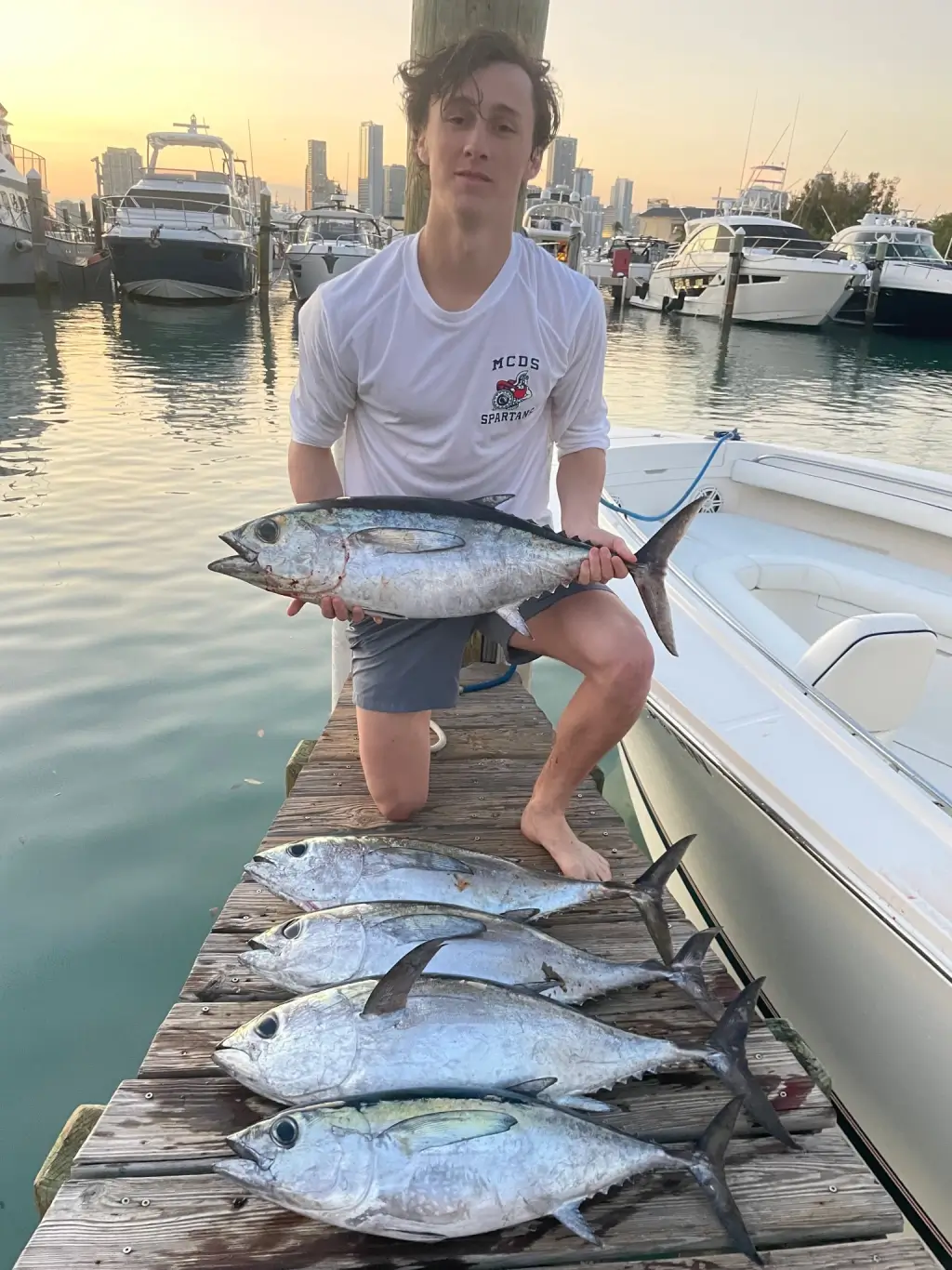
Blackfin are the backbone of spring tuna fishing here. They're fast, they're plentiful, and they fight way above their weight class. Most range between 10 and 25 pounds, though bigger fish show up when conditions are right. They travel in schools, often mixed with bonito or small kingfish, and they'll hit trolled lures, live bait, or chunk baits with equal aggression.
What makes blackfin special isn't just the numbers — it's the consistency. You can target them from March through May without worrying about whether they'll be there. They will. The question is whether you're fishing the right depth, speed, and presentation to get them to commit.
Techniques That Actually Produce Fish
Trolling is the go-to method for covering water and locating active schools. Captains run a spread of feathers, cedar plugs, and skirted ballyhoo at varying distances behind the boat. Speed matters — too slow and you won't trigger strikes, too fast and you'll blow past feeding zones before the fish react.
Once you mark fish or hook up, switching to live bait or chunking can keep the action going. Here's what works best:
- Trolling with small feathers or cedar plugs in natural colors
- Live pilchards or goggle eyes on light fluorocarbon leaders
- Chunk baits fished on the drift over structure or temperature breaks
- Vertical jigging when fish are holding deep or suspended mid-column
- Casting poppers or stick baits when tuna are busting bait on the surface
Gear That Holds Up Under Pressure
Tuna don't give you second chances. If your drag isn't set right or your knots aren't clean, you'll lose fish — simple as that. Most charters provide quality tackle, but if you're bringing your own, match the gear to the target.
Medium spinning or conventional setups work well for blackfin. Reels should hold at least 300 yards of 20- to 30-pound braid, with a fluorocarbon leader in the 30- to 50-pound range. Hooks need to be sharp, and terminal tackle should be inspected before every trip. Here's what belongs in your kit:
- Medium-heavy spinning rods rated for 15 to 30 pounds
- High-speed reels with smooth, reliable drags
- Fluorocarbon leaders in multiple pound tests
- Circle hooks for live bait, J-hooks for trolling
- Quality pliers, cutters, and a gaff for landing fish
Booking Smart Means Fishing Smart
Not all charters are created equal. Some captains know the water like the back of their hand. Others are just running a boat. The difference shows up in fish counts, safety, and whether you're actually fishing productive zones or just burning fuel.
Look for captains with local knowledge, clean boats, and a track record of putting clients on fish. Spring books up fast, so reserve early. Ask about trip length, what's included, and whether the captain adjusts tactics based on conditions or just runs the same pattern every day.
What Separates a Good Trip from a Great One
Preparation isn't glamorous, but it's the difference between landing fish and watching them swim away. Bring sun protection — the Florida sun doesn't care that it's only April. Hydrate before you leave the dock, not after you're already dehydrated. And listen to your captain. They've seen what works and what doesn't.
Here's what makes the day run smoother:
- Sunscreen, polarized sunglasses, and a wide-brim hat
- Plenty of water and snacks that won't spoil in the heat
- Non-slip shoes with good grip for wet decks
- A cooler with ice if you're keeping your catch
- Seasickness medication if you're prone to rough water
The Occasional Yellowfin Changes Everything
Blackfin are the bread and butter, but yellowfin are the prize. They don't show up as often, but when they do, they're worth the wait. Yellowfin in the 30- to 60-pound range aren't uncommon in spring, especially when bait concentrations are thick and water temps spike.
These fish require heavier tackle and more patience. They're smarter, more selective, and they'll test every weak point in your setup. But land one, and you'll understand why anglers chase them season after season.
Beyond the Boat
Key Biscayne isn't just a launch point — it's a destination. After a morning on the water, the island offers beaches, parks, and dining that make the trip more than just a fishing run. Crandon Park and Bill Baggs Cape Florida State Park provide scenic spots to unwind, and the local seafood scene serves up fresh catches that rival anything you'll find in Miami.
If you're traveling with non-anglers, they won't be bored. The island has enough to keep everyone engaged, whether that's kayaking, paddleboarding, or just soaking up the sun on some of the cleanest beaches in South Florida.
Timing Your Trip Right
March kicks off the season, but April and May are when things peak. Water temps stabilize, bait schools thicken, and tuna activity ramps up. Early morning trips tend to produce the best results, especially when the sun is low and fish are feeding near the surface.
Weather plays a role too. Spring can bring afternoon thunderstorms, so plan trips for the morning window when seas are calmer and visibility is better. Captains monitor forecasts closely and will adjust departure times or reschedule if conditions turn unsafe.
What to Do with Your Catch
Tuna are among the best-eating fish in the ocean. Blackfin, in particular, have firm, flavorful meat that works well raw, seared, or grilled. If you're keeping fish, make sure they're bled and iced immediately to preserve quality.
Many anglers bring their catch to local restaurants that will prepare it for a small fee. Others take it home and handle the filleting themselves. Either way, fresh tuna is a reward that goes beyond the fight — it's a meal you won't forget.
Common Mistakes That Cost Fish
Even experienced anglers make errors that blow opportunities. Setting the drag too tight leads to broken lines. Using leaders that are too heavy spooks fish. Ignoring the captain's advice because you "know better" usually ends with fewer fish in the box.
Here's what trips up most people:
- Not checking knots and terminal tackle before the first cast
- Overreacting when a fish runs and cranking down the drag mid-fight
- Using dull hooks that don't penetrate cleanly
- Failing to match bait size and presentation to current conditions
- Ignoring signs of feeding activity because they're not in the "usual" spot
Get on the Water Before the Season Peaks
Spring tuna fishing near Key Biscayne isn't a secret, but it's still one of the best-kept opportunities in South Florida. The fish are there, the conditions are right, and the captains know how to put you on them. Whether you're after blackfin for the table or chasing a trophy yellowfin, the window is open — but it won't stay that way forever. If you're looking for the best fishing spots in Key Biscayne, consider exploring top fish species to target in South Florida and learn techniques for catching trophy fish. Understanding best times of the year for different types of fishing will help you maximize your success, and if you're bringing the family, check out tips for fishing with kids. When you're ready to experience it firsthand, explore our offshore fishing trips and book your trip today. The Gulf Stream doesn't wait, and neither should you.
Let’s Make Your Next Fishing Trip Unforgettable
We know what it takes to turn a good day on the water into a story you’ll be telling for years. If you’re ready to chase spring tuna off Key Biscayne with a crew that lives for these moments, let’s get you on the calendar. Call us at 305-962-4014 or book now and let’s plan your next adventure together.
‹ Back
Recent Posts
-
How Weather Changes Fishing Trips in South Florida by Season
September 28, 2026
-
Can You Mix Reef Fishing & Mahi Fishing in South Florida?
September 14, 2026
-

-
Is Tuna Fishing in South Florida Better in Spring or Summer?
August 17, 2026
-
When Snapper Fishing in South Florida Starts Heating Up
August 3, 2026