



By using our website, you agree to the use of cookies as described in our Cookie Policy
Can You Mix Reef Fishing & Mahi Fishing in South Florida?
South Florida waters don't make you choose. You can hammer the reefs at dawn and chase mahi by midday — and plenty of anglers do. The structure sits close to shore, the blue water isn't far behind, and the fish don't care what your original plan was. If you've got the fuel and the flexibility, mixing both styles in one trip isn't just possible. It's smart.
Most captains know this. The tourists don't always. They book a reef trip or a mahi trip, like the ocean runs on a schedule. But the reality is simpler. South Florida's offshore geography was built for variety. You're not stuck in one lane unless you choose to be.
The Reef Bite Happens Early
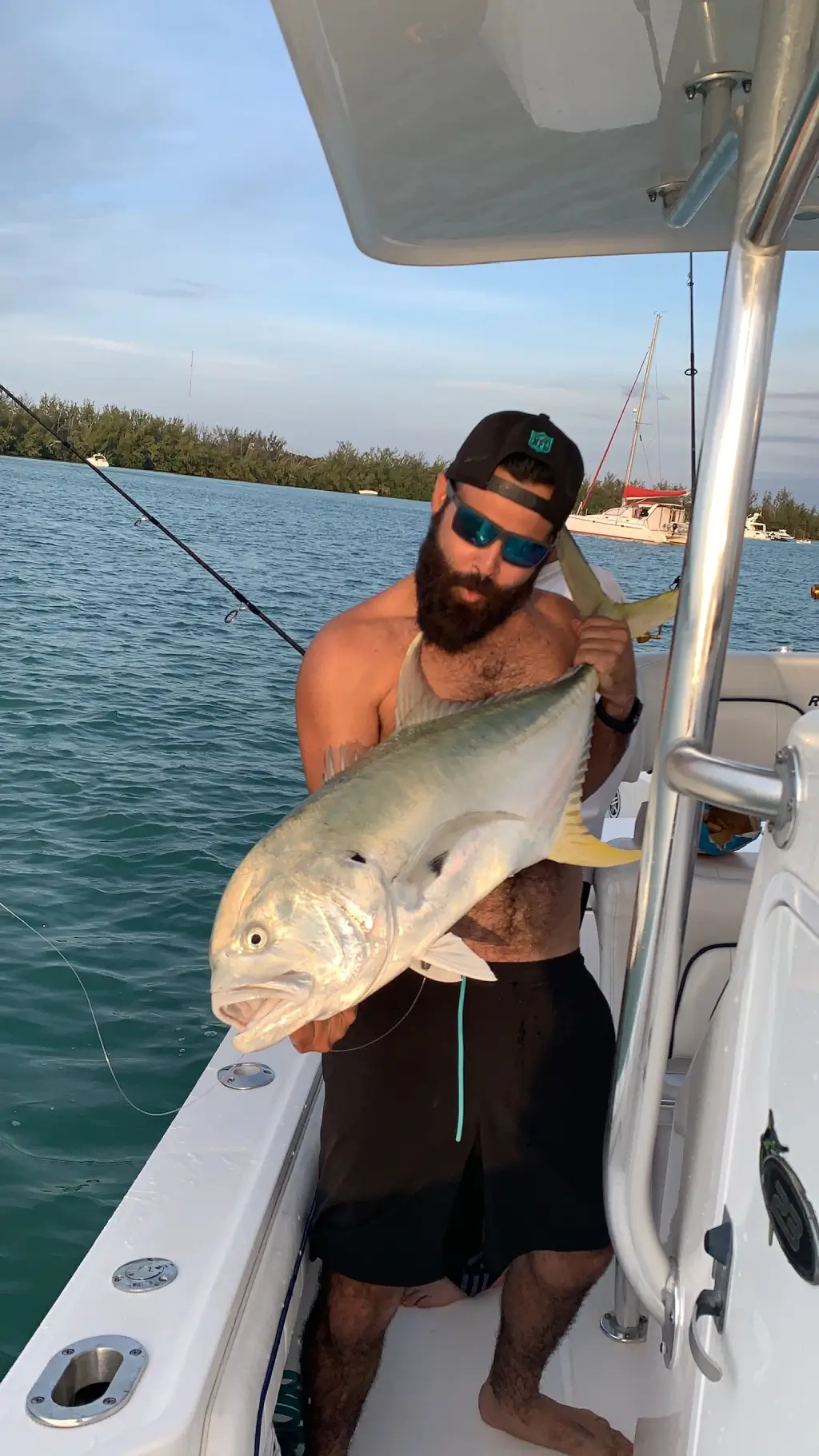
Reef fishing here means targeting structure — natural rock, artificial wrecks, rubble piles. Snapper, grouper, amberjack, and triggerfish stack up in these zones, and they feed hardest at first light. You drop baits or jigs, you feel the thump, you pull. It's straightforward. The reefs run parallel to the coast in depths between twenty and a hundred feet, which means you're not burning half your day just to get there.
The advantage of starting on the reef is simple. You can load the cooler early, then pivot. If the bite dies or the current shifts, you're not married to the structure. You've already caught fish, and now you've got options.
- Snapper and grouper hit best before the sun climbs high
- Reefs are close enough to reach without a long run
- Bottom fishing keeps everyone engaged while you wait for the offshore bite to turn on
- You're already rigged and ready when it's time to move
Mahi Show Up When the Water Warms
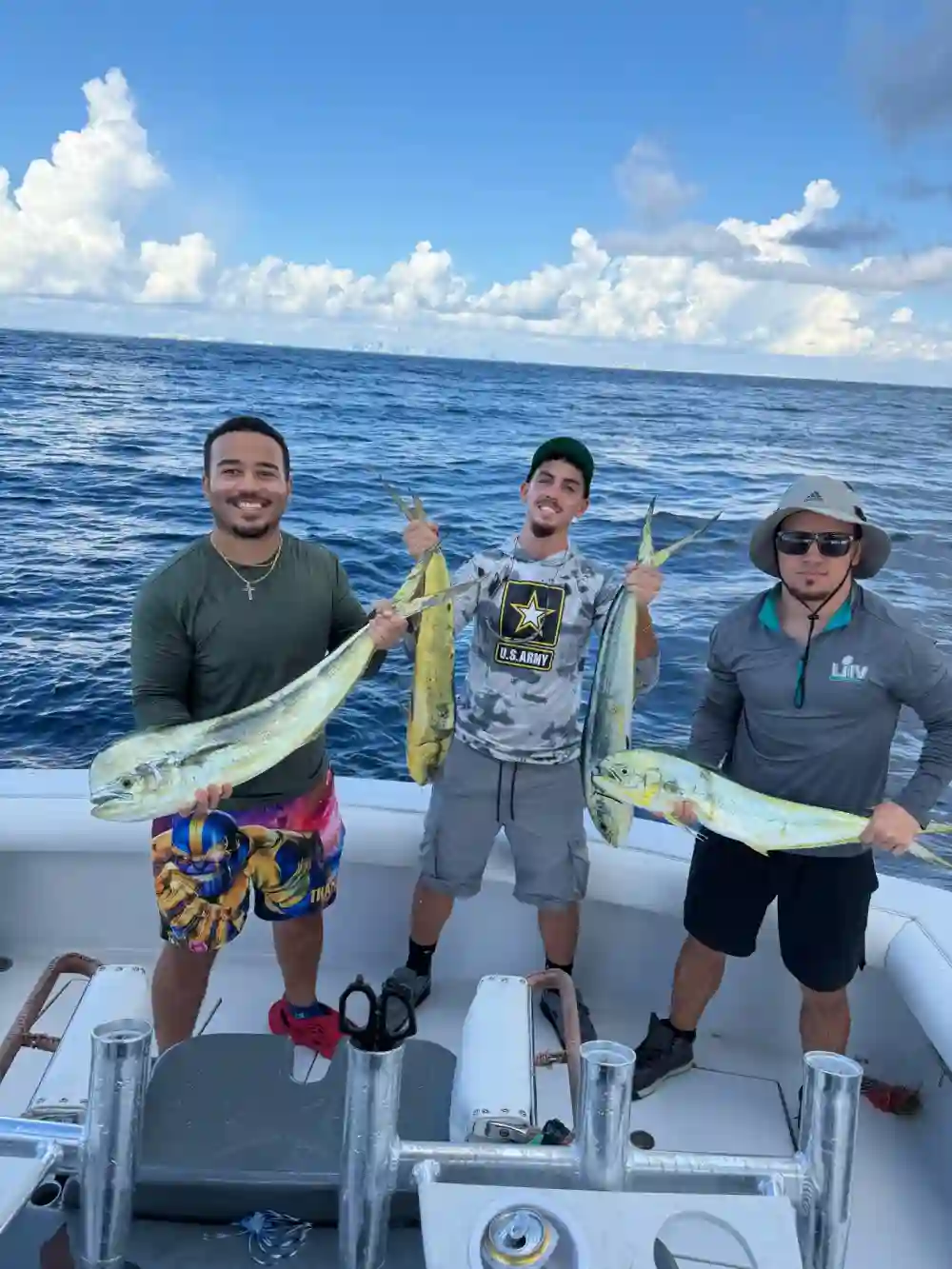
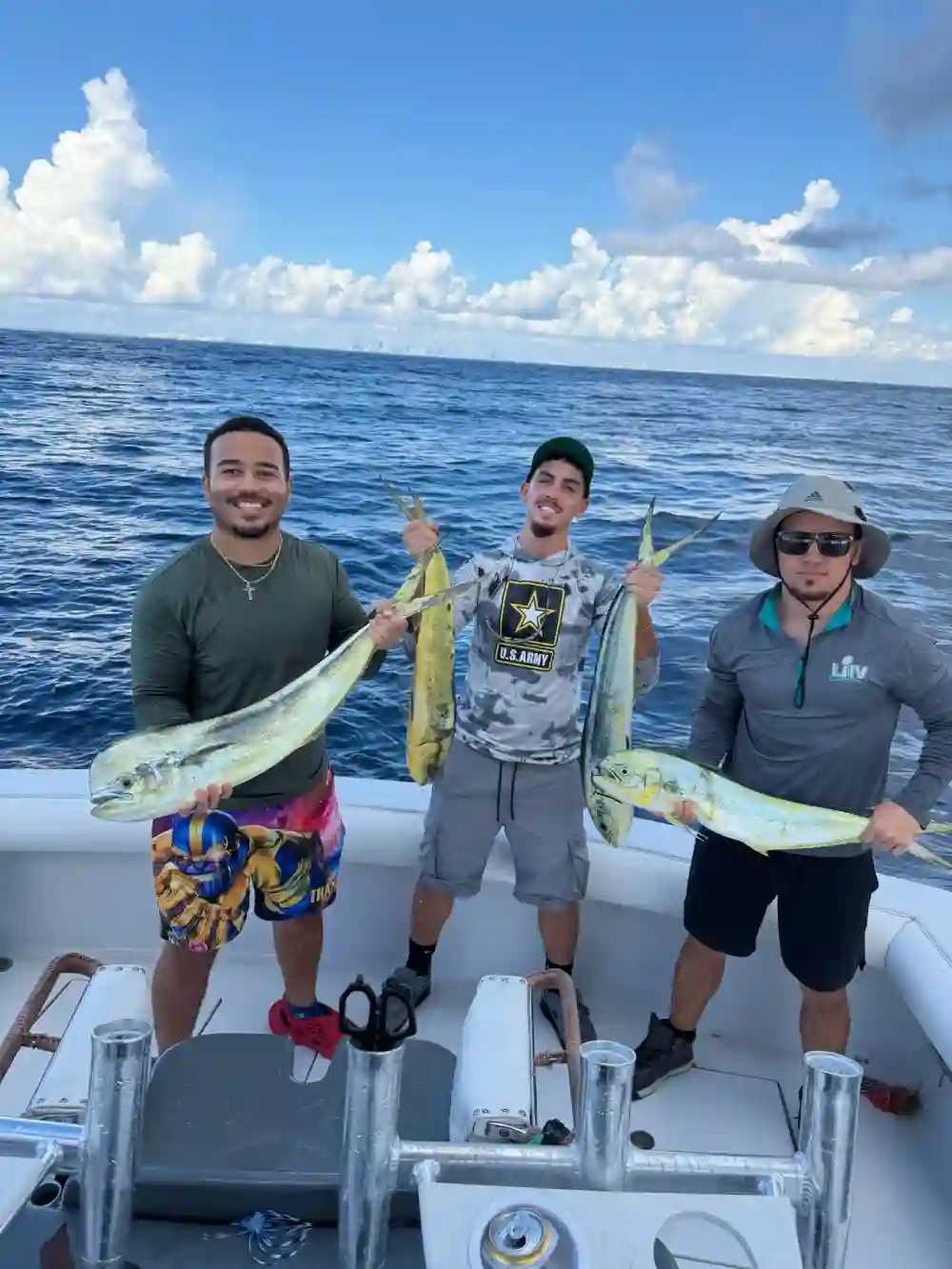
Mahi don't live on the reef. They cruise the open blue, chasing bait, hanging under flotsam, and riding current edges. You'll find them in deeper water, sometimes just a few miles past the reef line. They're fast, aggressive, and visual feeders. That means trolling lures or pitching live bait to weed lines and debris piles. When you hook one, you'll know — they jump, they run, and they don't quit until they're in the box.
The timing matters. Mahi fishing heats up as the day progresses, especially when the sun is overhead and bait is active near the surface. That's when most boats make the push offshore. If you've already hit the reef at sunrise, you're perfectly positioned to chase mahi by mid-morning without losing any momentum.
- Weed lines and floating debris are mahi magnets
- Trolling covers water fast and triggers aggressive strikes
- Birds diving on bait are a dead giveaway
- Color changes in the water signal current edges where mahi hunt
- Once you hook one, others often follow — so stay ready
The Geography Works in Your Favor
South Florida's offshore setup makes this combo trip possible without burning a tank of fuel or wasting hours in transit. The reef structure sits close to the coastline, and the Gulf Stream pushes warm, blue water close enough that the mahi grounds are within striking distance. You're not choosing between two separate fishing zones that require different launch points. You're working a gradient — shallow to deep, structure to open water — and you can cover both in a single morning.
That proximity is why local captains run mixed trips so often. They know the reef will produce early, and they know where the mahi are cruising by the time the sun gets high. It's not luck. It's logistics.
- Reefs are often less than ten miles from shore
- Prime mahi water is just a few miles farther out
- You're not making a long offshore run if you start on the reef
- Fuel costs stay reasonable when you're not pushing deep blue all day
Gear Up for Both Styles
You can't run one setup and expect it to cover everything. Reef fishing means heavier weights, circle hooks, and rigs that hold bottom in current. Mahi fishing means lighter drag, brighter lures, and rods that can handle surface chaos. If you're planning a mixed trip, pack for both. Bring terminal tackle for the reef and trolling gear for the offshore push. Don't skimp on bait, either — live pilchards work for both species, and frozen ballyhoo is a mahi staple.
Most anglers who try this for the first time underpack. They bring enough for one style and hope it works for the other. It doesn't. The fish don't care what you brought. They care what you're offering.
- Reef rods should be stout enough to pull fish off structure
- Mahi rods need flex and speed for surface strikes
- Bring a variety of lures — feathers, skirted trollers, and diving plugs
- Live bait works for both, but frozen options give you backup
- Don't forget a gaff and a cooler big enough for multiple species
Timing the Transition
The shift from reef to mahi isn't random. It's based on bite windows, water conditions, and how fast you fill the cooler. Most boats hit the reef at dawn, fish until mid-morning, then make the move offshore as the sun climbs. By that time, the reef bite usually slows, and the mahi are starting to chase bait near the surface. If the offshore conditions look rough or the current is ripping, you might stay on the reef longer. If the mahi are already showing up on the troll, you move faster.
The key is staying flexible. If you lock into one plan and refuse to adjust, you'll miss opportunities. The fish don't follow a script, and neither should you.
Best Seasons for a Mixed Bag
Mahi fishing peaks from late spring through early fall, when the fish migrate through South Florida in waves. That's when you'll find the most consistent action offshore. Reef fishing, on the other hand, stays productive year-round. Snapper and grouper are always around, though seasons and size limits change depending on the species. If you're planning a mixed trip, aim for the warmer months when both fisheries are firing.
That said, plenty of boats run this combo in winter too. The mahi bite slows, but it doesn't disappear. And the reefs never stop producing.
- Late spring and summer offer the best mahi action
- Reef species are available year-round with some seasonal restrictions
- Check local regulations before targeting snapper or grouper
- Winter trips can still produce both species if conditions align
Charter or Run It Yourself
If you're unfamiliar with the area, a charter makes sense. Local captains know where the fish are, how to read the water, and what gear to use. They'll put you on both species without the guesswork. If you've got your own boat and some offshore experience, this trip is entirely doable. Just bring the right equipment, check the weather, and have a backup plan if one bite doesn't cooperate.
Either way, the opportunity is there. South Florida doesn't force you to pick a lane. The reefs and the mahi grounds sit close enough that you can work both without sacrificing quality or burning daylight. Choosing the right charter means finding a captain who understands this strategy and can maximize both opportunities in a single trip. Load the cooler with bottom fish, then chase the jumpers. That's not greed — that's just using the water the way it was meant to be fished.
Let’s Plan Your Next Mixed Fishing Adventure
We know how rewarding it is to fill the cooler with snapper at sunrise and chase mahi under the midday sun. If you’re ready to experience the best of both worlds on your next South Florida trip, let’s make it happen together. Call us at 305-962-4014 to talk details, or book now and we’ll get you on the water for a day you won’t forget.
‹ Back
Recent Posts
-
How Weather Changes Fishing Trips in South Florida by Season
September 28, 2026
-
Can You Mix Reef Fishing & Mahi Fishing in South Florida?
September 14, 2026
-

-
Is Tuna Fishing in South Florida Better in Spring or Summer?
August 17, 2026
-
When Snapper Fishing in South Florida Starts Heating Up
August 3, 2026